Water flows through almost every part of our lives, yet it’s rarely something we stop to appreciate. We turn on the shower, start the dishwasher, brew coffee, wash clothes, and fill a glass without thinking twice. It’s only when water starts leaving white stains, making soap difficult to rinse, or causing appliances to struggle that we realize just how much its quality matters.
Hard water affects millions of homes, and while it isn’t usually considered unsafe to drink, the excess minerals it carries can create everyday frustrations that slowly build over time. Faucets lose their shine, towels become stiff, dishes come out spotted, and water heaters work harder than they should.
Fortunately, solving those problems doesn’t require a complete plumbing overhaul. A modern water softener quietly works behind the scenes, improving water quality throughout your home while making daily routines noticeably easier. The benefits often appear gradually, but once you experience softer water, it’s difficult to imagine going back.
What Makes Water “Hard”?
Hard water contains elevated levels of naturally occurring minerals, mainly calcium and magnesium. As groundwater travels through layers of rock and soil, it dissolves these minerals and carries them into household plumbing.
Although these minerals are common and naturally found in many water supplies, they create scale deposits wherever water evaporates or flows repeatedly. That’s why bathroom fixtures develop white residue, showerheads clog over time, and glassware often comes out of the dishwasher with cloudy spots.
Soap also reacts differently in hard water, making it harder to create a rich lather and leaving behind residue on skin, dishes, and fabrics.
Everyday Signs You May Have Hard Water
Many homeowners don’t immediately recognize hard water because its effects develop slowly. Smarter Water Treatment: How Connected Technology Can Make Filtration Easier
Some common signs include:
- White spots on dishes and glasses
- Soap scum on sinks and shower walls
- Dry skin after bathing
- Dull or stiff laundry
- Mineral buildup around faucets
- Reduced water pressure from scaling
- Appliances requiring frequent cleaning
- Cloudy shower doors
These issues often seem unrelated, but they’re usually connected by the same underlying cause.
Modern Water Softeners Are More Efficient Than Ever
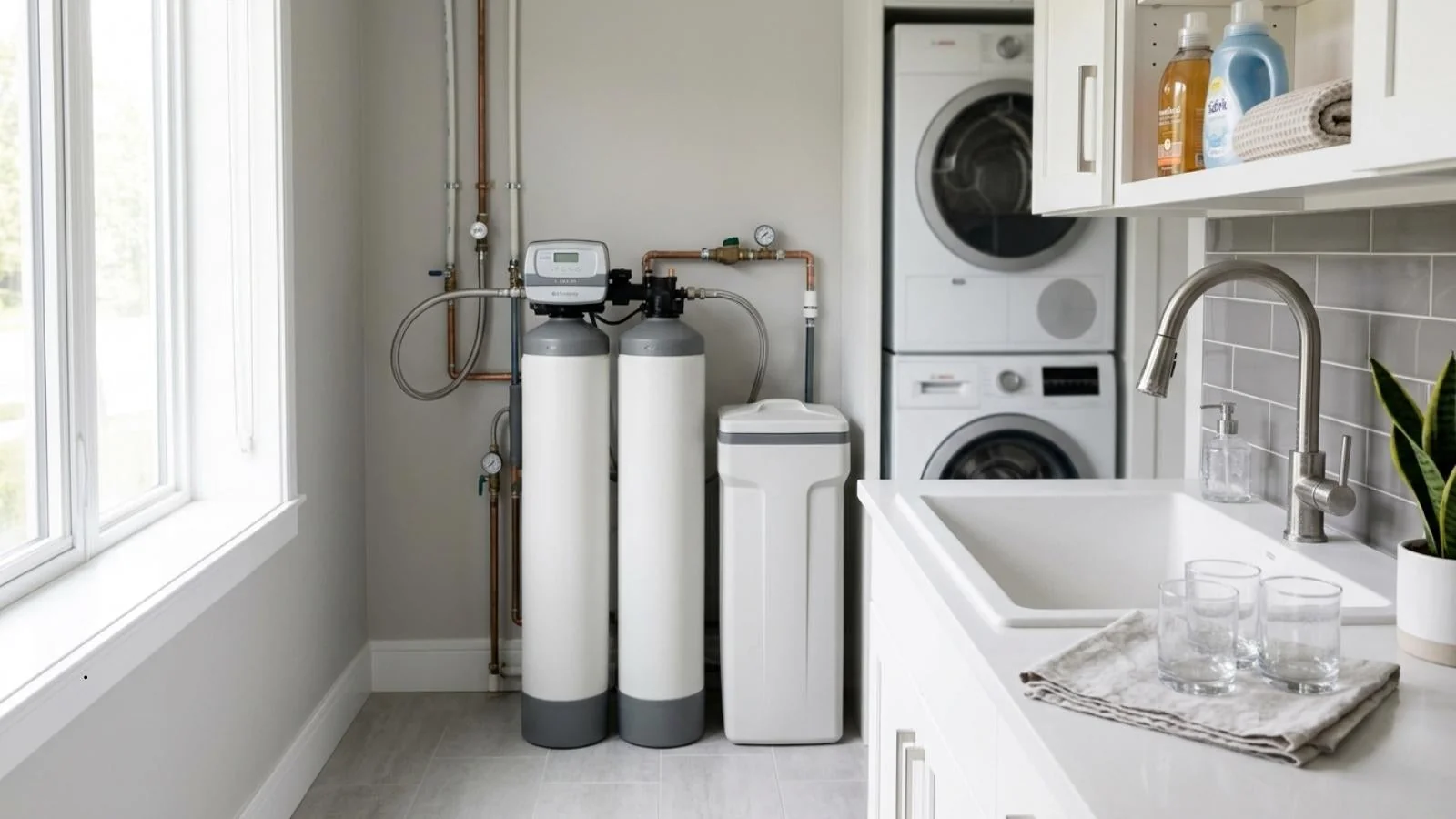
Technology has improved dramatically over the past several years, and today’s high-efficiency water softeners are designed to deliver excellent performance while using less salt and water than many older systems.
Instead of operating on fixed schedules, many advanced models monitor actual household water usage and regenerate only when necessary. This intelligent approach reduces waste while maintaining a consistent supply of softened water.
The result is greater efficiency without sacrificing performance, making today’s systems both environmentally friendly and cost-effective over the long term.
Better Results Throughout Your Home
Softened water doesn’t just improve one faucet—it benefits your entire plumbing system.
Kitchen sinks, bathroom showers, washing machines, dishwashers, water heaters, and outdoor hose connections all receive water with reduced mineral content. That means fewer scale deposits, easier cleaning, and a more enjoyable experience in everyday household tasks.
One benefit many families notice fairly quickly is cleaner dishes and laundry .
Glassware often appears brighter without cloudy residue, towels feel softer after washing, and clothes retain their color and texture more effectively because detergents work the way they’re supposed to. Beyond Basic Filtration: Understanding Specialized Water Treatment for Modern Facilities
It isn’t about making dramatic changes overnight. It’s about improving dozens of small routines that happen every single day.
Your Appliances Will Appreciate It Too
Household appliances work harder than most people realize.
Water heaters constantly warm incoming water. Dishwashers spray hundreds of gallons every month. Washing machines fill and drain repeatedly, while coffee makers and refrigerators process water daily.
When hard water minerals accumulate inside these appliances, efficiency gradually declines. Heating elements become insulated by scale, water flow may decrease, and internal components experience additional wear.
Softened water helps reduce mineral accumulation, contributing to longer appliance life while allowing equipment to operate more efficiently over time.
Considering the cost of replacing major appliances, protecting them simply makes good financial sense.
Less Time Cleaning Means More Time Living
One of the most satisfying changes after installing a water softener has nothing to do with plumbing. Why a Nitrate Water Test Can Be the First Step Toward Better Drinking Water
It’s the cleaning.
Bathroom fixtures remain shinier longer. Shower doors collect less stubborn residue. Kitchen faucets require less scrubbing, and sinks stay cleaner between deep cleanings.
Soap also rinses away more completely, reducing sticky residue that often attracts dirt and grime.
Many homeowners are surprised by how much less time they spend fighting mineral stains once hard water is no longer working against them.
Softer Water Can Feel Better
Ask people why they love softened water, and many won’t immediately mention plumbing or appliances.
Instead, they’ll talk about showers.
Soap creates a richer lather. Shampoo rinses more thoroughly. Towels feel softer, and skin often feels less dry after bathing. Hair may also feel smoother because mineral residue isn’t constantly being left behind. Why Your Tap Water Smells Like Chlorine and What You Can Do About It
While everyone’s experience is different, these personal comfort improvements are often among the first benefits homeowners notice.
Sometimes quality-of-life upgrades matter just as much as financial savings.
Choosing the Right System Matters
Not every household has identical water conditions.
Family size, local mineral levels, plumbing configuration, and daily water consumption all influence which softener will perform best.
That’s why professional water testing is often recommended before selecting equipment. Understanding your home’s specific water hardness allows you to choose a system that’s properly sized and optimized for long-term performance.
An oversized or undersized system may still work, but correctly matching the equipment to your home’s needs generally produces better efficiency and lower maintenance.
Maintenance Is Easier Than Many Expect
One reason some homeowners hesitate is the assumption that water softeners require constant attention. Why Better Water at Home Starts with Understanding What Your Family Really Needs
Fortunately, that’s rarely true.
Modern systems usually require only periodic salt replenishment and occasional inspections. Many include digital displays that monitor water usage, regeneration cycles, and maintenance reminders automatically.
Compared to constantly cleaning mineral deposits throughout your home, routine maintenance is relatively simple and easy to manage.
A Small Change With Lasting Benefits
Not every home improvement is immediately visible.
Fresh paint catches attention. New flooring changes a room’s appearance. Renovated kitchens impress visitors.
Water softening is different.
Its value is found in everyday moments—washing dishes that sparkle, stepping into a comfortable shower, doing laundry that feels softer, and knowing your appliances are working under better conditions.
Those small experiences quietly improve daily life without demanding much attention in return.
At the end of the day, investing in a quality water softener isn’t simply about removing minerals from water. It’s about creating a home that’s easier to maintain, more comfortable to live in, and better equipped to protect the systems and appliances you rely on every day. When one upgrade can improve so many ordinary routines, it’s easy to understand why homeowners continue to see it as one of the smartest long-term improvements they can make.